Grafting Techniques for Climate Resilient Citrus Rootstocks
Introduction
In the rapidly evolving landscape of global agriculture, a key priority is to ensure food security and sustainability in the face of climate change. One crop that is particularly susceptible to these challenges is citrus, which relies on specific rootstocks for growth. This article focuses on grafting techniques for climate resilient citrus rootstocks.
Development
To understand the importance of grafting techniques, let us first delve into the concept of rootstocks. Rootstocks serve as the foundation for citrus trees, providing essential nutrients and resistance to various environmental factors. Two popular climate resilient rootstocks are Trifoliata and Flying Dragon.
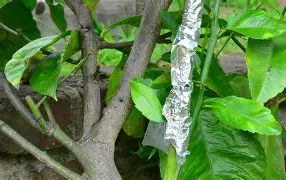
Trifoliata is a semi-dwarf rootstock that can accommodate various citrus varieties and thrive in both wet and dry ground conditions. On the other hand, Flying Dragon is a dwarf rootstock ideal for smaller backyards due to its compact size.
To graft citrus trees, first select a healthy rootstock seedling and prepare a bud stick from the desired variety. The bud stick should be firm and match the tree you want to propagate. Trim off thorns and leaves neatly, as there may be 15 buds on each stick.
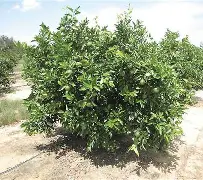
Next, make a horizontal cut on the rootstock at a 45-degree angle, about 1 inch long. Then, make a vertical cut upwards from the bottom of the horizontal cut, creating a T-shaped incision. The bud stick should be inserted into this T-shaped incision, with the buds facing outward.
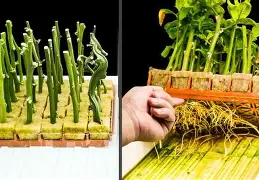
Once the graft is in place, secure it with grafting tape or wire to prevent it from separating. After several weeks, new growth will emerge from the grafted buds, indicating a successful graft.
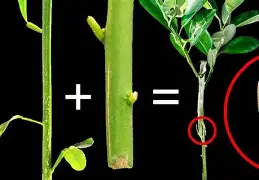
Conclusion
The grafting techniques for climate resilient citrus rootstocks not only ensure the survival of this valuable crop but also contribute to sustainable development in agriculture. By employing these methods, farmers can adapt their practices to changing climates and create more resilient citrus orchards.