Cloud Based Tracking Platforms for Agricultural Carbon Credits: A New Era in Precision Agriculture and Sustainable Development
Introduction
The agricultural sector has a significant role in global greenhouse gas emissions, primarily due to soil management practices and livestock farming. However, agriculture can also play a pivotal part in carbon sequestration through regenerative practices such as cover cropping, reduced tillage, and crop rotation. This article explores how cloud-based tracking platforms are revolutionizing agricultural carbon credits by empowering farmers to measure, monitor, and monetize their carbon sequestration efforts.
Development
Cloud-based platforms leverage advanced data analytics and satellite imagery to track the carbon cycle within farmlands. These platforms help farmers collect crucial data on soil health, crop productivity, and greenhouse gas emissions, making it possible for them to identify practices that maximize carbon sequestration while minimizing environmental impact.
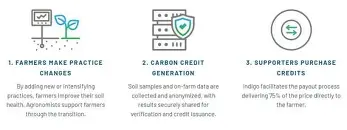
- Data Collection: Platforms like Indigo Carbon use satellite imagery from organizations such as NASA to gather data on individual fields. This data is then processed and stored in cloud-based storage systems like Amazon S3 and RDS for further analysis.
- Modeling: The collected data is used to drive models that help farmers optimize their practices for carbon sequestration. For example, Indigo Carbon’s platform uses this data to generate recommendations on crop rotation, cover cropping, and nutrient management to maximize carbon storage in the soil.
- Carbon Credit Generation: Once a farm has demonstrated increased carbon sequestration over time, it can generate carbon credits that can be sold to companies looking to offset their carbon emissions. This revenue stream incentivizes farmers to adopt regenerative practices and invest in sustainable agriculture.
Blockchain Integration
In addition to cloud-based platforms, blockchain technology is being integrated into the agricultural carbon credit market. By tokenizing carbon credits, companies can purchase and trade these digital assets on a secure, transparent, and tamper-proof platform.
Conclusion
Cloud-based tracking platforms and blockchain integration are reshaping the agricultural landscape by enabling farmers to generate revenue from carbon sequestration efforts. As global warming continues to be a pressing issue, these technologies will play an increasingly important role in promoting sustainable development within the agribusiness sector.
Future Trends
As these technologies continue to evolve, we can expect further advancements in precision agriculture and carbon sequestration. This includes the integration of Internet of Things (IoT) devices, machine learning algorithms, and advanced analytics to optimize farming practices for maximum carbon storage.

Global Agribusiness Impact
The potential impact of these technologies on global agribusiness is significant. By incentivizing sustainable practices and promoting carbon sequestration, cloud-based platforms and blockchain integration can help reduce greenhouse gas emissions, mitigate climate change, and foster a more resilient and sustainable agriculture sector.

Investment Opportunities
For institutional investors, these technologies present an attractive opportunity to support sustainable development within the agribusiness sector. By investing in companies that leverage cloud-based tracking platforms and blockchain technology for agricultural carbon credits, investors can help drive positive environmental and social impact while generating returns.