The Architecture of Digital Governance and Social Stratification in Brazil
The transition toward a digital society in Brazil is not a linear technological upgrade but a complex socio-technical reconfiguration. This process is characterized by a profound tension between the expansion of digital rights and the persistence of structural inequalities that dictate access to information. The resulting landscape is one where the digital layer often mirrors and amplifies existing socio-economic disparities.
Brazil’s demographic complexity, spanning over 5,570 municipalities, creates a fragmented digital ecosystem. The decline in the Human Development Index (HDI) from 79th to 84th position reflects a systemic failure to synchronize technological adoption with educational advancement. This gap is most evident in the extreme income concentration, where the wealthiest 1% hold 28.3% of the national income, while the poorest 40% possess only 10.4%.
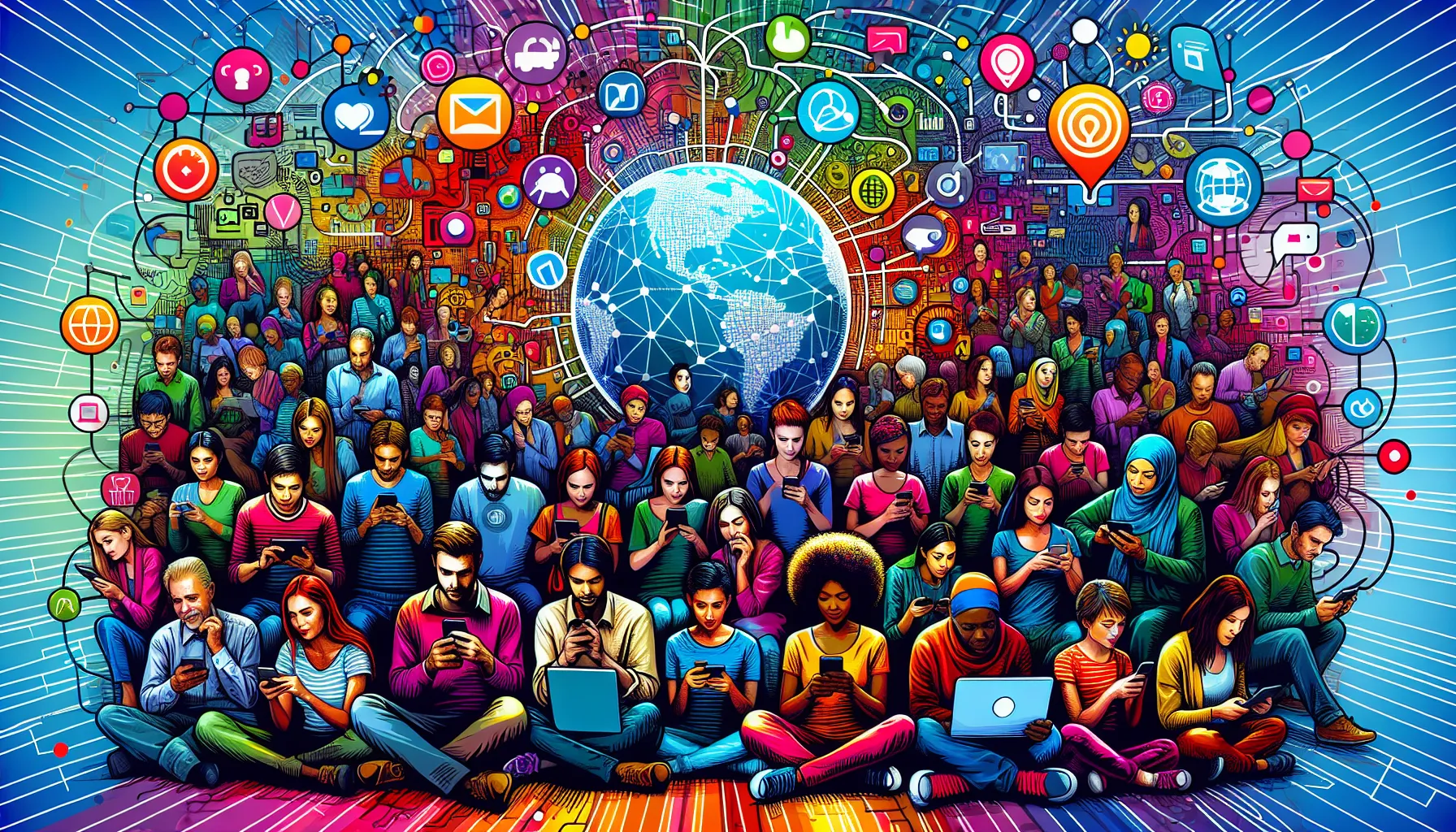
This asymmetric distribution of wealth directly correlates to a significant digital divide, which was acutely exacerbated during the COVID-19 pandemic. The shift toward remote education and digital public services revealed that infrastructure is not uniformly distributed, leaving populations in the North and Northeast regions, as well as urban peripheries, in a state of digital exclusion.
Governança Digital na Administração Pública: Conceitos Cobrados na Câmara
Quais caminhos para uma governança digital eficiente? | SOCIEDADE DIGITAL
Brasil Digital: Estratégia, Governança e o Futuro da Inovação
E-Digital: soberania como eixo central da estratégia do governo
The Legal Framework: The Marco Civil as a Digital Constitution
The Marco Civil da Internet serves as the foundational legal pillar for the Brazilian cyberspace, functioning effectively as a digital constitution. It establishes that democratic principles, including freedom of expression and human rights, are fully applicable in the digital realm. The law prioritizes civil rights while encouraging free enterprise, provided such economic activities do not conflict with established democratic principles.
A critical component of this framework is the protection of privacy and the inviolability of communications. Article 7 was specifically refined to prevent arbitrary state surveillance, requiring judicial orders for the violation of communication secrecy. This legislative move was a direct response to global surveillance revelations, ensuring that the flow of data remains protected from unauthorized government intrusion.
However, this legal protection has faced significant challenges from conservative legislative blocs. Efforts such as the “Spy Bill” (PL 215/2015) attempted to undermine privacy norms by requiring internet companies to store extensive user data. This ongoing struggle highlights the friction between state security interests and the individual’s right to digital privacy.
From Electronic Government to Digital Governance
The evolution of the Brazilian State’s interaction with its citizens has shifted from a model of “Electronic Government” to one of Digital Governance Strategy. Initiated in 2000, the early phase focused on the digitization of existing bureaucratic processes, such as income tax filings and social security benefits. This was essentially a transition from physical paper to digital formats without altering the underlying administrative logic.
The paradigm shift occurred around 2016 with the implementation of the Digital Governance Strategy (EGD). This new approach emphasizes the modernization of the State through debureaucratization and the rationalization of public spending. By 2019, this acceleration resulted in the delivery of over 500 digital public services, aiming to increase trust between the citizen and the State.
The Distinction Between Government and Governance
In a technical sense, there is a vital distinction between the act of governing and the process of governance. While government refers to the administrative execution of power, governance involves a pre-decisional consultation process. This ensures that decisions are built through collaborative dialogue with the citizens they affect.
The integration of Artificial Intelligence and improved digital accessibility allows this governance model to be more efficient. By reducing the need for physical presence at legislative assemblies or public hearings, technology can potentially democratize participation, provided the underlying infrastructure is accessible to all social strata.
Socio-Technical Risks in the Era of Big Data
The current digital market in Brazil is dominated by transnational economic giants that operate on the logic of big data. This creates a systemic risk where the pursuit of user attention for commercial gain can compromise personality rights on an individual and collective scale. The concentration of data power in a few private entities threatens the institutional harmony of the State.
The digital divide is not merely a lack of hardware but a barrier to the exercise of citizenship. When public services migrate exclusively to digital platforms, those without connectivity or digital literacy are effectively disenfranchised. This creates a paradox where the tools intended for modernization may inadvertently deepen social exclusion.
FAQ
What is the primary purpose of the Marco Civil da Internet?
It acts as a digital constitution for Brazil, establishing the principles of freedom, privacy, and human rights as the governing rules for the use of the internet in the country.
How does the “digital divide” manifest in Brazil?
It manifests as an asymmetric access to telecommunications infrastructure and digital services, closely tied to income inequality and regional disparities, particularly affecting the North and Northeast regions.
What is the difference between Electronic Government and Digital Governance?
Electronic Government focuses on the digitization of existing services (moving from paper to screen), whereas Digital Governance involves a paradigm shift toward modernizing the State’s relationship with society through collaboration and strategic simplification.