Global Internet Governance: A Systemic Architecture for Digital Sovereignty and Inclusion
Internet governance operates not as a centralized regulatory body, but as a multi-stakeholder architecture designed to coordinate the evolution of the global network. This framework integrates technical communities, academic institutions, private sectors, and civil society to ensure that the digital layer of human civilization remains open and interoperable. The objective is to balance the tension between national sovereignty and the borderless nature of data transmission.
The operationalization of this model occurs through the Internet Governance Forum (IGF), promoted by the United Nations. To bridge the gap between global policy and local reality, the system utilizes National and Regional IGFs (NRIs), which act as decentralized nodes for dialogue. These entities, such as the Portuguese Initiative for the Internet Governance Forum (IPFGI), synthesize local perspectives into “Messages” that inform the annual global summit.
This hierarchical yet fluid flow of information ensures that technical standards are not merely imposed from the top down. Instead, it allows for a bottom-up synthesis where regional specificities—whether linguistic, cultural, or economic—are integrated into the global discourse. This process prevents the emergence of a digital monoculture and promotes a more resilient global infrastructure.
KARL MARX: The Philosopher Who Unleashed a Global Revolution – Documentary
Gestão Global de Pessoas: como a Deloitte apoia empresas em mobilidade, compliance e estratégia
Agro global: quem entende o sistema, lidera o futuro
A Contagem Regressiva para o Colapso Global
Decentralization and Technical Appropriation
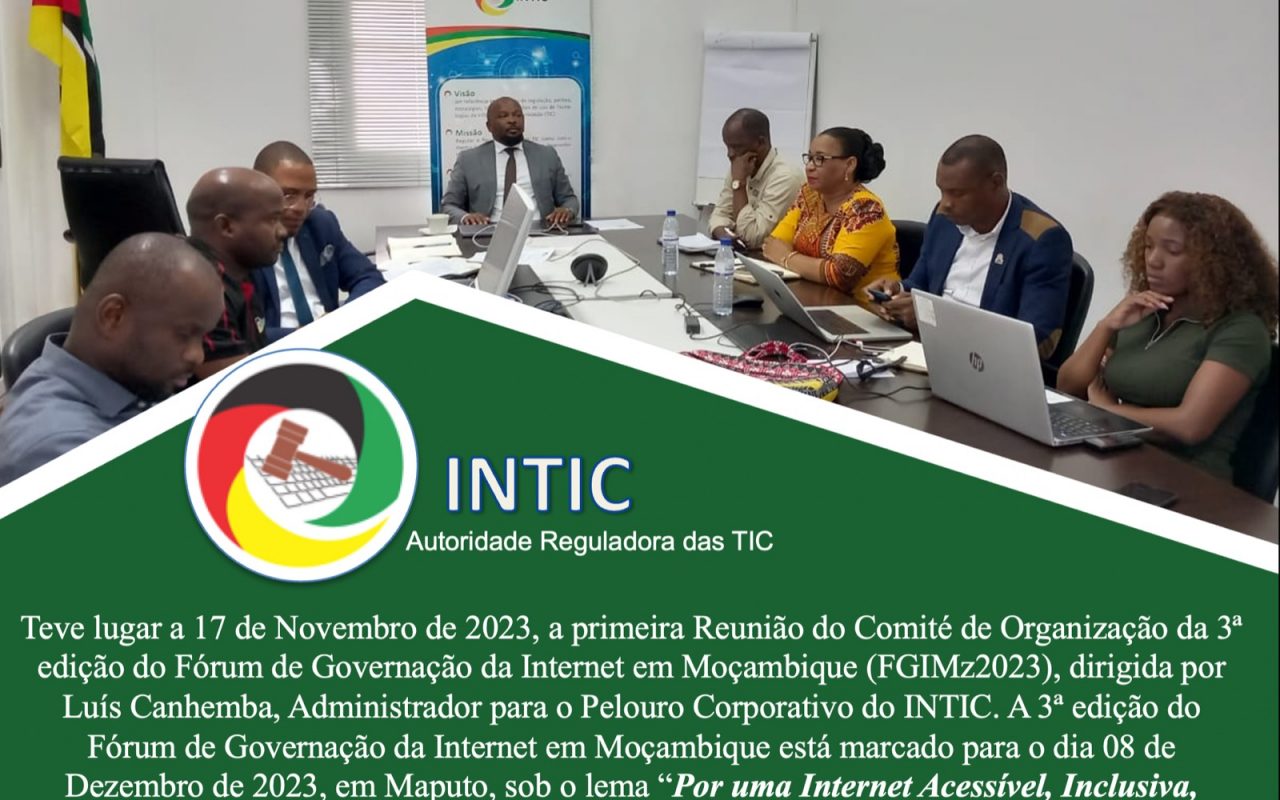
True digital equity requires moving beyond national capitals to the provincial and municipal levels. In Mozambique, the Ministry of Science, Technology and Higher Education, via INTIC, has implemented this by decentralizing governance forums to provinces like Maputo, Sofala, and Cabo Delgado. This strategy aims for technical appropriation, ensuring that local communities are not passive consumers of technology but active participants in its governance.
By shifting the debate to the periphery, governance focuses on the practicalities of accessibility and inclusion. The objective is to establish a consensus on cybersecurity frameworks and legal structures that are grounded in democratic principles. This localized approach mitigates the risk of “digital colonialism” by aligning technological deployment with the specific socio-economic needs of the region.
The Intersection of Policy and Infrastructure
The integration of provincial forums allows for the direct auscultation of society regarding the legal and regulatory instruments in preparation. This feedback loop is critical for developing cybersecurity policies that are both technically viable and socially acceptable. It transforms the abstract concept of “governance” into a tangible set of rules that protect the end-user while fostering innovation.
Linguistic Sovereignty and the AI Frontier
The Maputo Charter, emerging from the 3rd Lusophone Internet Governance Forum, identifies multilinguism as a cornerstone of a multipolar world. It posits that linguistic sovereignty is inextricably linked to cultural and digital autonomy. For the Portuguese-speaking community, this means ensuring that the language is not merely a translation layer but a primary vehicle for digital creation and governance.
This is particularly critical in the era of Large Language Models (LLMs) and artificial intelligence. The Charter emphasizes that multilingual AI development must include the perspective of linguistic diversity to avoid cognitive biases inherent in English-centric datasets. Without this, AI risks becoming a tool for cultural homogenization rather than a catalyst for global knowledge exchange.
Digital Inclusion as a Sovereign Right
Digital inclusion is redefined here not as simple connectivity, but as “meaningful access.” This involves the capacity for individuals and communities to construct their own narratives and exercise autonomy over their digital identities. When combined with digital inclusion, the internet becomes an instrument of empowerment and social development rather than a mechanism for surveillance or external control.
Systemic Implications for Global Stability
The convergence of multi-stakeholder dialogue, decentralized implementation, and linguistic diversity creates a robust framework for global stability. By diversifying the nodes of power and the languages of innovation, the global community reduces the systemic risk associated with centralized failures. This approach mirrors ecological resilience, where diversity is the primary defense against systemic collapse.
Ultimately, the governance of the internet is the governance of the modern world’s nervous system. Ensuring that this system is inclusive, transparent, and multipolar is not merely a technical requirement but a prerequisite for sustainable global development. The transition from a centralized model to a distributed, inclusive architecture is the only path toward true digital sovereignty.
FAQ
What is the primary function of the National and Regional IGFs (NRIs)?
NRIs serve as localized platforms for dialogue that gather stakeholders from various sectors to debate internet governance. They synthesize these discussions into “Messages” that are then carried forward to the global IGF, ensuring that local and regional perspectives influence global policy.
How does the Maputo Charter address the challenge of Artificial Intelligence?
The Maputo Charter argues that AI development must integrate linguistic diversity, specifically the Portuguese language, to ensure cultural sovereignty. It warns against the risks of AI models that ignore multilinguism, which could lead to a loss of cultural identity and biased technological outcomes.
Why is the decentralization of governance forums important in the Mozambican context?
Decentralization to provinces like Maputo, Sofala, and Cabo Delgado ensures that the process of “technical appropriation” occurs. It allows local communities to engage with cybersecurity and digital policy, ensuring that the resulting legal frameworks are inclusive and reflective of the needs of the entire population, not just the urban elite.