Systemic Integration of Accessible Housing within Digital Urban Frameworks
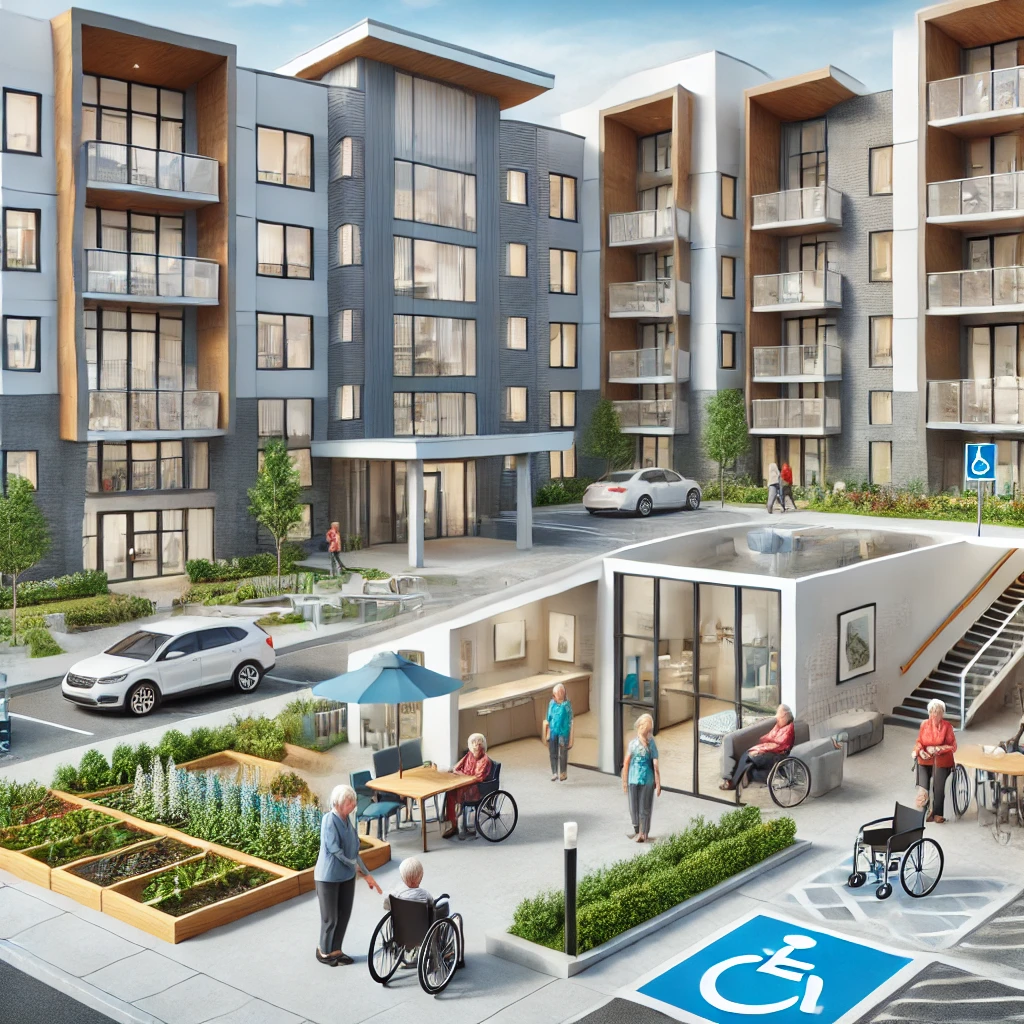
The current housing stock in North America exhibits a systemic failure to integrate accessibility as a fundamental architectural requirement. This deficiency forces a significant portion of the aging population and individuals with disabilities into sterile, high-cost for-profit care facilities. The financial burden is immense, often exceeding $100,000 annually for private rooms.
Accessibility is frequently reduced to a compliance exercise rather than a Baseline Requirement. This “checklist” mentality results in a critical shortage, where less than 1% of U.S. housing meets the specific needs of wheelchair users. Such a gap disproportionately affects marginalized communities with limited generational wealth to fund private retrofits.
The transition from traditional construction to Universal Design is essential to mitigate the risk of injury and institutionalization. When homes are not designed for mobility aids, the likelihood of falls increases during basic personal care activities. This necessitates a shift toward proactive, rather than reactive, architectural interventions.
Reimagine the Possibilities for Equitable, Accessible and Affordable Housing
Supporting Survivors in Achieving Permanent, Safe, Accessible, and Affordable Housing
Designing Accessible Homes for Everyone 🏡 Aging in Place & People with Disabilities
A National Housing Strategy to make housing as accessible as possible
The Convergence of Digital Wayfinding and Physical Infrastructure
Modern accessibility extends beyond the physical dimensions of a doorway to include the cognitive and sensory navigation of the environment. Smart Wayfinding leverages real-time data to provide predictability and confidence for individuals with mobility or visual impairments. This involves the deployment of beacons that transmit critical spatial information to specialized software.
The integration of Dynamic Signage linked to SMS and smartphone technology allows users to navigate urban environments based on current conditions. For a wheelchair user, this means avoiding crowded corridors or identifying the most efficient path to an accessible carriage on a train. Such technology transforms the urban experience from a series of hurdles into a seamless flow.
To achieve true accessibility, digital tools must be paired with physical markers like texturally contrasting paving and clear building lines. These elements provide essential tactile feedback for those using walking canes or guide dogs. The synergy between digital beacons and physical contrast creates a redundant, fail-safe navigation system.
Policy Frameworks and Economic Scalability
Addressing the housing shortage requires a shift in the economic model of development to ensure affordability. A Mixed-Income Model, which balances social impact renters with non-market renters, can create financially sustainable and vibrant communities. This approach allows for flexibility as the financial circumstances of residents evolve over time.
Retrofitting older structures is a critical priority, as many buildings from the 1970s lack modern accessibility features. The RAD program provides a mechanism for making significant enhancements, such as installing barrier-free bathrooms and raising countertops. These modifications are essential for allowing older adults to age in place with dignity.
Policymakers must move beyond mere requirements and implement faster approval processes and clearer standards. Incentivizing builders to deliver accessibility at scale prevents the cost of these features from pricing out the very people who need them. Accessibility must be treated as a core utility rather than a niche add-on.
Ecological Impact and Urban Connectivity
Accessible housing cannot exist in isolation; it must be integrated into a broader network of sustainable urban infrastructure. This includes the creation of undercover waiting areas and transport linkages with clear lines of sight from building entrances. Such connectivity reduces the reliance on specialized, high-emission transport services.
The clustering of amenities—such as drinking fountains, rest seating, and garbage bins—offset from main pathways ensures that movement remains unobstructed. When these elements are designed with a 45-degree angle for bike racks and clear lateral colors, the urban footprint becomes more efficient. This spatial optimization reduces urban friction and enhances overall ecological sustainability.
Ultimately, the digital age provides the tools to map and monitor accessibility gaps in real-time. By utilizing data-driven urban planning, cities can identify “dead zones” where accessibility fails and prioritize interventions. This analytical approach ensures that housing policy is responsive to the actual biological and physical needs of the population.
FAQ
Why is the current shortage of accessible housing so severe?
The shortage persists because accessibility has been treated as a compliance checklist rather than a baseline requirement in construction. Most housing is still designed under the assumption that all occupants can walk, climb stairs, and navigate tight spaces without assistance.
How does “Smart Wayfinding” differ from traditional signage?
Unlike static signs, smart wayfinding uses technology such as beacons and dynamic signage linked to smartphones. This allows for real-time updates and personalized navigation, helping users avoid obstacles and find accessible amenities more efficiently.
What is the benefit of a mixed-income housing model for accessibility?
A mixed-income model creates a financially sustainable ecosystem where rents from different tiers support the maintenance and modification of units. This ensures that accessibility enhancements can be implemented without making the housing unaffordable for low-income residents.