Systemic Integration of Spatial Accessibility in Urban Housing Policy
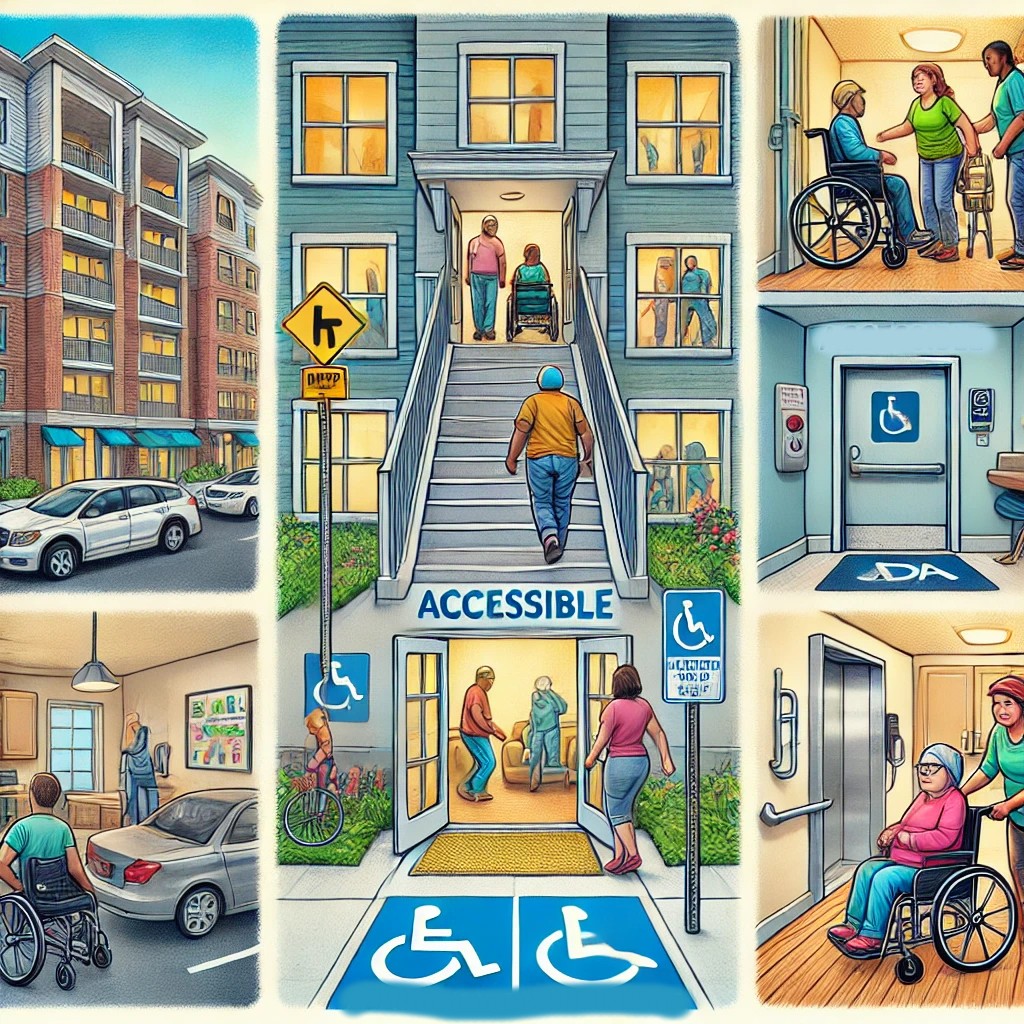
The current global housing crisis is not merely a quantitative deficit of residential units but a qualitative failure in spatial accessibility. For millions of disabled individuals, the gap between “affordable” and “accessible” creates a systemic barrier that restricts independence and exacerbates chronic health conditions. This discrepancy transforms the domestic environment into a site of physical restriction rather than a sanctuary of support.
Current baseline standards, often categorized as “visitable,” are fundamentally insufficient for permanent habitation by those with significant mobility impairments. These standards frequently result in narrow doorways and inaccessible sanitary facilities, forcing a reliance on costly retrospective adaptations. Such inefficiencies place an undue burden on local authority finances and increase the demand for Disabled Facilities Grants.
To mitigate these failures, policy must shift toward the M4(2) accessible and adaptable standard, ensuring homes are designed for inclusion from the onset. This transition requires a departure from reactive “firefighting” toward preventative, integrated urban planning. The objective is to eliminate the physical and attitudinal barriers that stifle human potential and increase reliance on the NHS.
The 7 HR Trends That Will Impact Businesses in 2026 — and Beyond | Tomorrowist
6 Marketing Trends ACTUALLY Working Right Now (2026 State of Marketing Report)
Gartner’s Top Tech Trends for 2026 | Live From IT Symposium/Xpo
The Future of Business: 13 tech trends that matter
Technological Paradigms in Accessible Construction
Modular Fabrication and Scalability
The adoption of modular and prefabricated housing offers a high-precision alternative to traditional onsite construction. By utilizing off-site manufacturing, governments can ensure that accessibility features are embedded into the structural core of the building. Examples from Singapore’s Housing Development Board and the Netherlands demonstrate that prefabrication reduces construction timelines while maintaining rigorous quality controls.
Smart Infrastructure and Zoning Reform
Effective accessibility requires more than internal modifications; it necessitates a holistic approach to zoning reforms. Policies such as California’s Senate Bill 9 and New Zealand’s Medium-Density Residential Standards allow for higher-density, mixed-use developments. This urban density, when coupled with smart infrastructure, reduces the isolation of disabled residents by integrating housing with accessible transit and community services.
Economic Frameworks and Policy Challenges
Breaking Interdisciplinary Silos
A critical challenge in housing policy is the existence of interdisciplinary silos between housing, health, and social care funding. When these sectors operate independently, the cost of inadequate housing is shifted onto the healthcare system in the form of worsening patient conditions. A unified funding strategy would allow for preventative investment in accessible housing, reducing long-term expenditures on social care.
Leveraging Public-Private Partnerships
To scale the delivery of accessible units, governments are increasingly utilizing Public-Private Partnerships (PPPs). Mechanisms such as the Low-Income Housing Tax Credit (LIHTC) in the United States and the Affordable Homes Programme in the UK incentivize private developers to include subsidized, accessible units. However, the efficacy of these partnerships depends on the strict enforcement of accessibility mandates rather than optional guidelines.
The Data Deficit in Urban Planning
A profound barrier to the delivery of accessible housing is the lack of granular, accurate data regarding the specific needs of disabled populations. Without precise demographic and spatial data, local authorities and planning bodies cannot effectively forecast the required volume of adaptable homes. This data gap leads to a misalignment between planned developments and the actual requirements of the community.
Furthermore, the private rented sector remains a high-risk area for spatial accessibility, as it often lacks the regulatory oversight found in social housing. Many disabled tenants face narrow doorways and a lack of level access, which directly contributes to social isolation and a loss of independence. Addressing this requires a policy shift that mandates accessibility standards across all tenure types.
FAQ
What is the difference between “visitable” and “accessible” housing?
Visitable housing meets a minimum baseline that allows a disabled person to enter and use a few rooms, but it is not designed for permanent residence. Accessible housing, such as the M4(2) standard, is designed to be adaptable for long-term living, ensuring full functionality of bathrooms, kitchens, and circulation spaces.
How does modular construction improve accessibility?
Modular construction allows for the precise integration of accessibility features in a controlled factory environment. This reduces the likelihood of human error during onsite installation and ensures that every unit meets strict technical specifications for width, height, and adaptability.
Why is the integration of health and housing funding necessary?
Inaccessible housing often leads to deteriorating health and increased demand for social care services. By integrating funding, governments can invest in “preventative” housing standards that reduce the long-term financial burden on the healthcare system.