The Architecture of Interoperability: W3C and the Evolution of Global Communication Infrastructure
The operationality of the global internet relies fundamentally on rigorous technical standardization. Without a unified set of rules, the digital ecosystem would collapse into a fragmented landscape of proprietary silos, rendering cross-platform communication impossible. This systemic cohesion is maintained by the World Wide Web Consortium (W3C), which ensures that the web remains open, accessible, and technically consistent across diverse hardware and software environments.
Founded in 1994 by Tim Berners-Lee, the W3C functions as a collaborative consortium comprising technology firms, academic institutions, and government bodies. Its primary objective is to prevent the chaos of proprietary fragmentation by developing universal standards. These standards act as the technical “rules of engagement,” allowing a single piece of content to be rendered accurately across disparate browsers and devices.
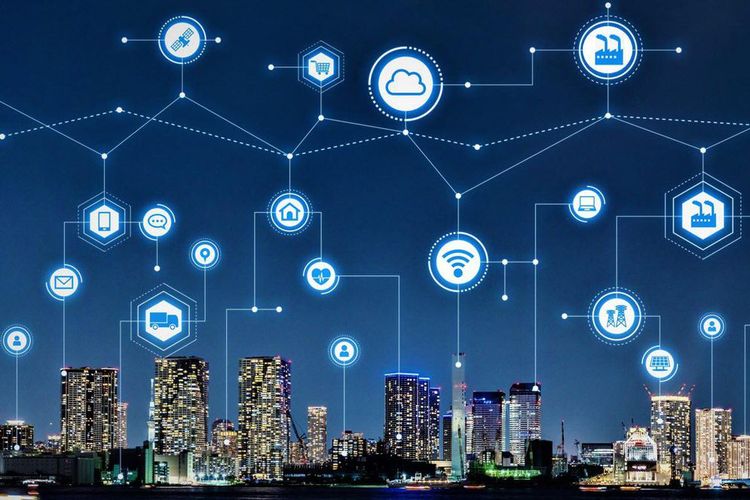
The consortium’s influence is most evident in the deployment of core languages and protocols that structure the modern web. From the structural integrity provided by HTML to the visual orchestration of CSS, these standards ensure that the digital interface is predictable and scalable. Furthermore, the implementation of interoperability allows complex applications to communicate seamlessly, which is critical for the integration of Smart Urban Infrastructure and AgTech sensors.
SET Sul 2026 debate futuro da comunicação em Florianópolis
14ª Jornada da Comunicação | Humanos + IA: o futuro da comunicação já começou (26/03/2026)
WEB3: Qual futuro da comunicação entre pessoas e empresas no mundo online? | SOCIEDADE DIGITAL
O futuro da comunicação em tempos de IA | Aquário Casa Firjan
Technical Pillars of the W3C Framework
The W3C does not act as a regulatory body with legal enforcement power, but rather as a technical authority whose standards are adopted due to their efficiency and broad acceptance. One of its most profound contributions is the Semantic Web, a set of technologies designed to enable machines to interpret data contextually rather than merely displaying it. This shift from human-readable to machine-understandable data is essential for the automation of sustainable development systems.
Accessibility is another critical dimension of the W3C’s mandate, specifically through the Web Accessibility (WCAG) guidelines. By establishing Web Accessibility (WCAG), the consortium ensures that digital interfaces are inclusive, removing barriers for users with disabilities. This commitment to universality prevents the creation of digital divides in the dissemination of critical environmental and social information.
Beyond static content, the W3C defines Web APIs that facilitate the interaction between browsers and hardware. These interfaces are the conduits through which real-time data from urban sensors or agricultural drones are transmitted and visualized. The standardization of these APIs prevents vendor lock-in and encourages the development of open-source environmental monitoring tools.
Data Dynamics and the Infrastructure of Communication
The transition toward a more intelligent communication infrastructure is driven by the processing of Big Data, characterized by the “three Vs”: volume, variety, and velocity. In the context of environmental technology, these data streams require advanced processing to transform raw inputs into actionable insights for ecological preservation. The ability to handle these complex datasets is what allows for the optimization of resource allocation in smart cities.
To optimize the delivery of this data, the internet employs mechanisms such as cache memory, which stores static data temporarily to reduce latency. Similarly, cookies facilitate personalized user experiences by storing fragments of data on local devices. These technical nuances, while often invisible, are the gears that allow high-velocity data transfers—downloads—to occur efficiently across global networks.
As we move toward the future of communication, the integration of Artificial Intelligence (AI) into content production is redefining the media landscape. The emergence of TV 3.0 represents a shift toward highly interactive television experiences, moving away from linear broadcasting toward a data-driven, bidirectional communication model. This evolution requires a secure regulatory environment to provide legal certainty for the technological investments required.
Managing Ambiguity in Technological Transitions
The rapid deployment of these technologies often creates a gap between technical capability and organizational understanding. In high-stakes environments, such as the transition to smart infrastructure, communication often suffers from ambiguity. The process of sense-making becomes vital here, as organizations must interpret uncertain scenarios without falling into the trap of silence or misinformation.
Transparency in communication is not about having every answer immediately, but about honestly conveying the current state of development. When technical processes are still under construction, maintaining an active dialogue prevents the paralysis that occurs when uncertainty is ignored. This strategic transparency is essential for aligning multidisciplinary teams during the implementation of complex environmental technologies.
Ultimately, the future of communication lies at the intersection of rigid technical standards and flexible organizational communication. While the W3C provides the stable foundation of interoperability, the human element of sense-making ensures that these tools are deployed effectively to solve the pressing challenges of sustainable development and urban resilience.
FAQ
What is the primary difference between the W3C and a government regulator?
The W3C is a collaborative consortium that develops technical standards based on consensus and efficiency; it does not have the legal authority to impose mandatory rules or penalties, unlike a government regulator.
How does the Semantic Web differ from the traditional web?
While the traditional web focuses on making content readable for humans, the Semantic Web implements technologies that allow machines to understand the meaning and context of data, enabling more advanced automation and data integration.
What are the “three Vs” of Big Data mentioned in the text?
The three Vs refer to Volume (the amount of data), Variety (the different types of data), and Velocity (the speed at which data is generated and processed).
What is TV 3.0 and why is it significant?
TV 3.0 is the next generation of digital television that emphasizes interactivity and a personalized user experience, shifting the medium from a passive viewing experience to an active, data-driven communication channel.