Agroforestry Systems: Combining Trees and Crops for Profit
Introduction
In today’s rapidly evolving agricultural landscape, the intersection of traditional farming practices and modern technology is shaping a new era of sustainable development. One such approach that exemplifies this synergy is agroforestry – an age-old concept reimagined for a more resilient and profitable future.
Agroforestry: A New Approach to Agriculture
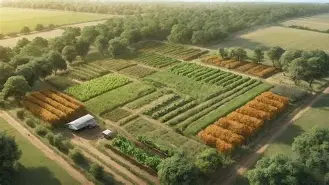
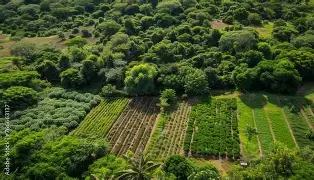
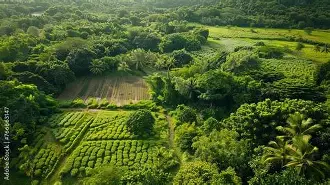
Agroforestry, or agriculture with trees, involves the intentional integration of trees, crops, and sometimes livestock within a single area. This can range from small field plots to vast landscapes, with tree arrangements varying based on factors such as species, spatial distribution, and temporal dynamics.
By combining these elements, agroforestry systems offer numerous benefits: biodiversity enhancement, carbon sequestration, increased resilience, sustained production, and more efficient nutrient and water use. The integration of trees and crops can also provide shade, windbreaks, and erosion control, while livestock can help manage vegetation and improve soil fertility.
The Nuts and Bolts of Agroforestry
Successfully implementing an agroforestry system requires careful planning, as competition for resources like light, nutrients, and water may arise between components. It is essential to choose compatible species that do not exhibit allelopathy (negative interactions between plants). Additionally, appropriate spatial arrangements can help mitigate these potential issues and maximize the benefits of this multifunctional approach.
The Future of Agroforestry: Profit and Sustainability
While agroforestry systems may require a longer payback period compared to simplified or monocropping systems, the long-term benefits can exceed those of traditional agriculture. As awareness of sustainable practices grows among farmers and investors alike, agroforestry is poised to play an increasingly significant role in global agribusiness trends.
Conclusion
As we navigate the challenges of climate change, resource depletion, and global population growth, innovative agricultural solutions like agroforestry are essential to ensuring food security, environmental conservation, and economic development. By embracing this ancient yet forward-thinking approach, we can create a more sustainable and profitable future for generations to come.
Resources
References

Further Reading