Understanding Manuel Castells’ Vision on the Network Society
Manuel Castells conceptualizes the network society as a fundamental structural transformation emerging from the convergence of micro-electronic communication technologies and global capitalism. This paradigm marks the transition from an industrial society, centered on material production, to an Information Age driven by the processing of knowledge. The resulting social architecture is no longer hierarchical but networked.
At the core of this transition is the global informational economy, where productivity is derived from the ability to generate, process, and apply knowledge based on information. Unlike industrial capitalism, which relied on centralized factories and physical labor, this new mode of production leverages decentralized nodes of communication. This shift redefines the very nature of power and social organization.
The network society is characterized by a decentralized system of nodes that allow for multi-dimensional and multi-directional communication. These nodes are not uniform in importance, creating a new topology of influence where access to the network determines socio-economic viability. This architecture enables the expansion and contraction of social structures in real-time.
Castells and the Network Society
Power and Identity in the Digital Age | Manuel Castell | Sociology
The Technology Revolution: Manuel Castells
🎯Manuel Castells: in one shot-UGCNET Sociology:Castells made easy.#sociology #ugcnet #shortnotes
The Spatial and Temporal Reconfiguration
Castells introduces the space of flows to describe the technological capacity to engage in activities across vast distances without the requirement of physical proximity. This conceptual framework explains how financial markets and media networks operate independently of traditional geographic constraints. In this environment, the physical location of a node is secondary to its connectivity within the global network.
Parallel to this spatial shift is the emergence of timeless time, a condition where traditional sequences of social time are disrupted. Asynchronous interactions and random disturbances replace the linear, sequential time of the industrial era. This temporal flexibility allows for instantaneous global coordination but also introduces precariousness into employment and social stability.
From a technical perspective, this reconfiguration allows for the deployment of smart urban infrastructure that operates on real-time data streams. The decoupling of activity from physical space enables the management of complex systems, such as energy grids or logistics, through a distributed network of sensors and controllers. This mirrors the shift from bounded groups to networks of networks.
Knowledge Economy and Productive Capacity
The transition to the Information Age represents the unleashing of productive capacity through the power of the mind. Castells argues that information and communication networks have become the central drivers of productivity, replacing the mechanical energy of the industrial age. This shift necessitates a move toward a knowledge-based economy where the primary asset is the ability to manipulate information.
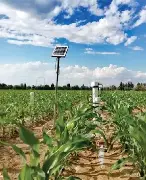
In the context of AgTech, this is evident in the shift toward precision agriculture, where networked digital information replaces intuitive or generalized farming methods. By integrating satellite data, IoT sensors, and AI, the agricultural sector transforms into a series of nodes within a larger informational network. This optimization of resources is a direct application of the network logic Castells theorized.
However, this transition creates a new form of social stratification based on network inclusion. Those who lack access to the necessary technological infrastructure are marginalized, not by a lack of physical resources, but by their exclusion from the flows of information. This creates a digital divide that reinforces existing global inequalities.
Power Dynamics in a Decentralized Architecture
Power in the network society is no longer concentrated solely in the hands of the nation-state or centralized bureaucracies. Instead, power resides in the ability to program the networks and switch between them. The culture of real virtuality further blends the physical and digital realms, altering how individuals perceive and interact with authority.
The ability to control the nodes of communication allows dominant actors to shape the narrative and the flow of capital. While the network is theoretically open and decentralized, the actual distribution of influence remains asymmetrical. This asymmetry determines which interests are prioritized within the global informational economy.
For sustainable development, this implies that ecological impact is often decoupled from the decision-making centers located in the space of flows. The environmental externalities of a network-driven economy are frequently displaced to the physical periphery, while the economic benefits are captured by the highly connected nodes. Addressing this requires a reconfiguration of the network to prioritize ecological sustainability over mere informational efficiency.
FAQ
What is the primary difference between an industrial society and a network society?
An industrial society is organized around centralized hierarchies and the production of material goods, whereas a network society is organized around decentralized networks and the processing of information and knowledge.
How does the “space of flows” impact urban planning?
The space of flows allows for the creation of smart infrastructure where urban functions are managed via real-time data and remote connectivity, reducing the reliance on physical proximity for administrative and economic coordination.
What does Castells mean by “timeless time”?
Timeless time refers to the disruption of linear social time, enabling asynchronous communication and the ability to perform tasks instantaneously regardless of traditional temporal sequences.
Why is the “node” a critical concept in this theory?
Nodes are the points of connection within a network; while the system is decentralized, not all nodes possess equal importance, which determines the distribution of power and resources within the society.