The Digital Society According to Manuel Castells: A Structural Analysis
Manuel Castells posits that the transition to a digital society is not a mere adoption of tools but a fundamental reconfiguration of social and economic structures. This shift manifests as a network society, where the logic of the network replaces the logic of the hierarchy. The resulting architecture allows information to flow globally, fundamentally altering the distribution of power and influence.
The digitalization of organizational structures has evolved into a permanent framework for human communication and economic activity. This systemic integration ensures that administrative and economic functions persist even during periods of extreme physical confinement. Consequently, the digital layer has become the primary substrate for social interaction and institutional survival.
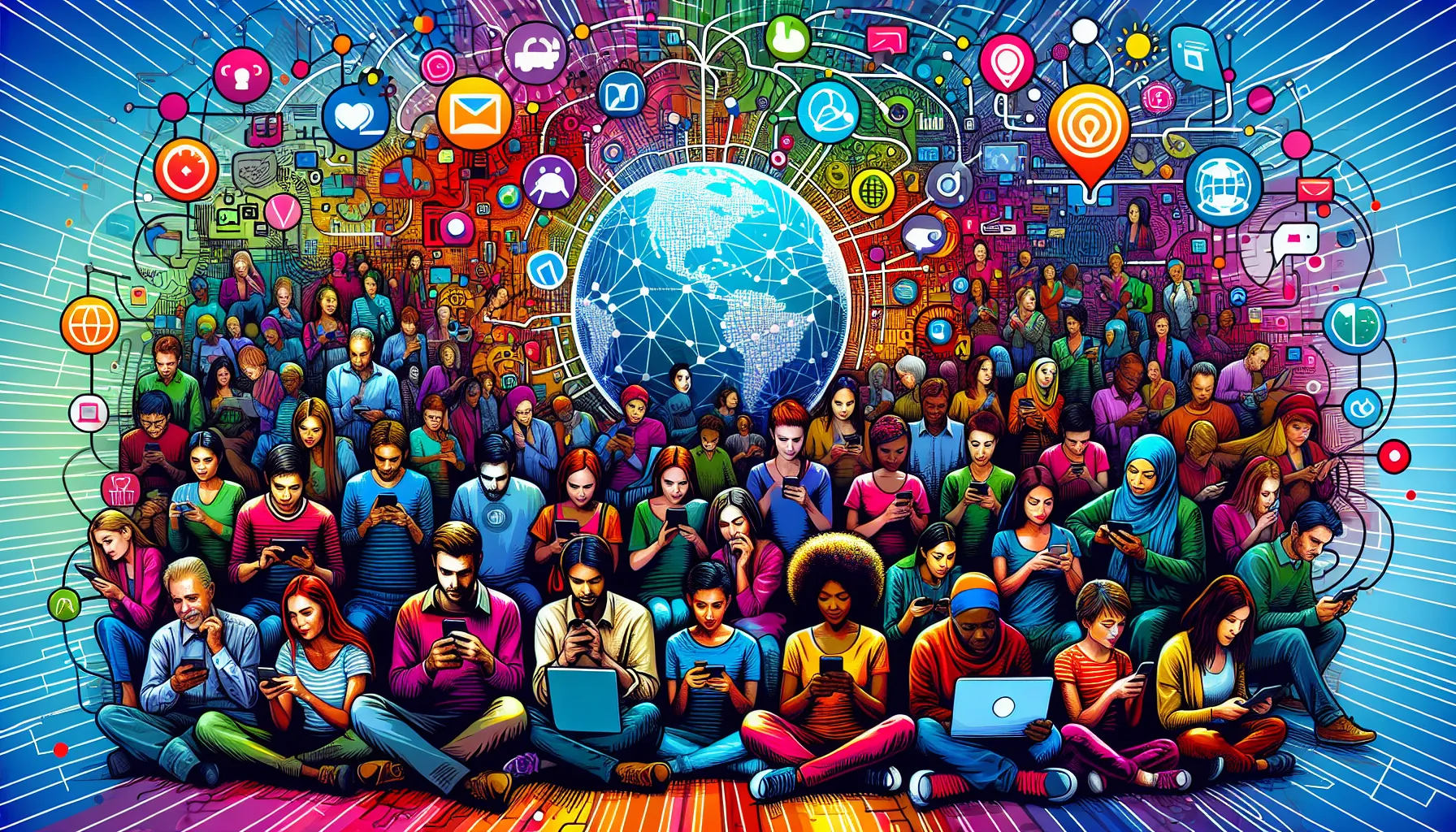
Empirical data indicates that the penetration of mobile technology often exceeds the population count, creating a ubiquitous connectivity layer. In specific regions, the high density of smartphones transforms the individual into a node within a global information grid. This saturation facilitates a seamless transition between physical and virtual operational modes.
Leis de Mendel: tudo que você precisa saber (e vai cair no ENEM)
The answer you need (Jn 6:35-40) Word of God | Sister Maria Raquel 04/22
Os ÚNICOS 4 FIIS que você precisa comprar em 2026
Aprenda a Cuidar de Você | Deive Leonardo
The Paradigm of the Network Society
The Redistribution of Power
Castells argues that the information age redefines the nature of influence by decentralizing the monopoly of communication. Power no longer resides solely in institutional centers but in the ability to program and switch networks. This fluidity allows for the emergence of new identities that often challenge traditional institutional power.
The Role of Identity in Digital Networks
Within this framework, identity becomes a primary source of meaning and experience for individuals. These identities are often formed in opposition to institutional power, utilizing digital networks to organize and amplify their presence. The digital space thus becomes a battlefield for cultural and social recognition.
Infrastructure and the “New Normal”
Digitalization as Permanent Structure
The “new normal” described by Castells implies that digitalization is an irreversible structural evolution. From a technologist’s perspective, this mirrors the integration of smart urban infrastructure, where data flows optimize resource allocation and systemic efficiency. The digital society is effectively the cognitive layer of our physical environment.
Connectivity vs. Socio-Economic Inequality
While digital inequality persists, evidence suggests it is often less pronounced than disparities in wealth or income. The accessibility of communication tools provides a baseline of connectivity that transcends some traditional socio-economic barriers. However, the capacity to leverage these networks for systemic influence remains unevenly distributed.
The Mirror Effect and Regulatory Imperatives
Algorithmic Amplification of Human Nature
The internet acts as a mirror, reflecting the inherent contradictions and biases of human nature, including racism and xenophobia. While the technology provides the medium, the destructive effects are products of human agency amplified by algorithmic centralization. The platforms do not author the content but are corresponsible for the environment in which it thrives.
The Necessity of Technical Regulation
Given the capacity for digital networks to facilitate “barbarism,” there is a critical need for the regulation of AI and social networks. Without a framework based on education and respect, the digitalization of society risks amplifying conflict rather than fostering construction. Regulation must target the systemic incentives of profit that currently drive algorithmic polarization.
FAQ
What is the “Network Society” according to Manuel Castells?
It is a social structure where the primary unit of organization is the network, allowing information to flow globally and redefining how power, culture, and economy operate.
Why does Castells believe the internet is a “mirror”?
He argues that the internet does not create human flaws like racism or sexism, but rather reflects and amplifies existing human behaviors and societal tensions.
Is the digital divide the primary source of inequality in the digital society?
No; while it exists, Castells suggests that inequality in internet access is often lower than the inequality of income or wealth.
What is the relationship between the “new normal” and digitalization?
The “new normal” refers to the total and permanent integration of digital tools into the economic and social organization of society, making it a requirement for survival and communication.