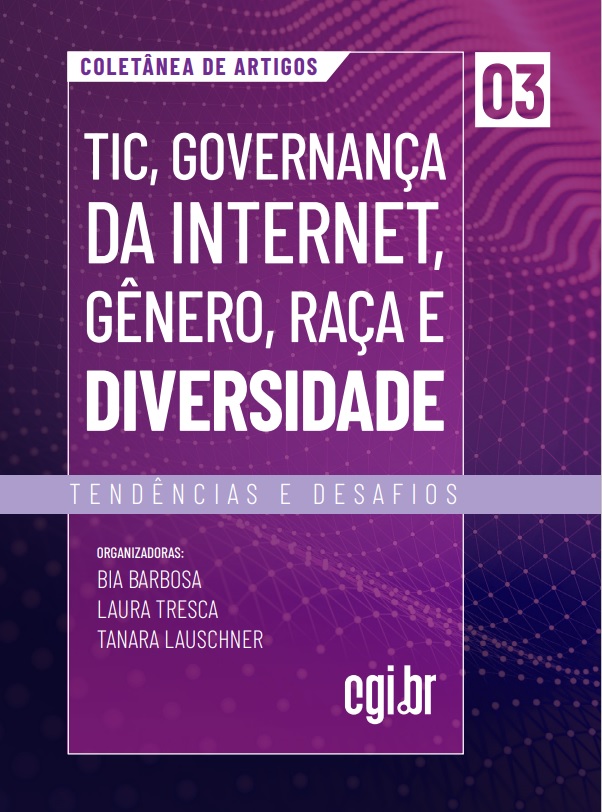
ICTs, Race, and Gender Challenged: The True Face of Internet Governance in Brazil
The stability of a nation’s digital ecosystem depends on the structural integrity of its multi-stakeholder model, a governance framework that prevents the monopolization of network protocols by any single entity. In Brazil, this is embodied by the Comitê Gestor da Internet (CGI.br), which integrates government, academia, the third sector, and private enterprises to ensure that public interests supersede private profit. This pluralistic approach is designed to mitigate the risks of technocratic capture and ensure that the internet remains a shared resource rather than a proprietary territory.
Current governance is not merely an administrative exercise but a critical mediation of access and rights. The CGI.br, composed of 21 members, manages the strategic balance between technical efficiency and democratic inclusion, overseeing the NIC.br to handle essential functions like IP address allocation and domain name registration. This separation of powers ensures that the rules of the road are not dictated by those who own the physical roads.
However, the perception of the internet as a “no man’s land” persists, masking the reality that every packet of data is subject to a layer of governance. When users face barriers to VoIP services or broadband availability in remote regions, they are experiencing the direct outcomes of governance decisions. The failure to resolve these bottlenecks is not a technical glitch but a reflection of the socio-political priorities embedded in the network’s administration.
VERDADE: O QUE SUA GOVERNANÇA CHAMA DE VERDADE É, DE FATO, DECISÃO CONSISTENTE?
04.03. Aula de Governança Pública (Administração) [REUP]
Hora da Verdade TRF 2: Noções de Governança – Prof. Rodrigo Rennó
Princípios da Governança – Parte 1
The Institutional Risk: PL 4557/2024 and the Threat of Centralization
The introduction of Project Law (PL) 4557/2024 represents a potential institutional regression by proposing the transfer of CGI.br and NIC.br attributes to the National Telecommunications Agency (ANATEL). This shift would collapse the critical distinction between protocol governance—which deals with the logical norms and standards of the internet—and the governance of physical telecommunications infrastructure. Such a merger contradicts international best practices, mirroring the separation seen between the ITU and ICANN/IANA.
From a technical standpoint, placing the registration of domain names and IP addresses under a regulatory agency like ANATEL risks politicizing the core technical layer of the internet. The multi-stakeholder model acts as a buffer, ensuring that normative attributes are decided through consensus rather than administrative decree. If this buffer is removed, the agility and neutrality of the Brazilian digital space could be compromised by bureaucratic rigidity or partisan interests.
The Impact on Smart Infrastructure and AgTech
For a Senior Strategist in Sustainable Development, this centralization is particularly alarming when considering the deployment of Smart Urban Infrastructure and AgTech. These sectors rely on open, interoperable standards to integrate IoT sensors, precision agriculture drones, and urban mobility grids. If governance shifts toward a closed, agency-led model, the risk of vendor lock-in increases, potentially stifling the innovation required for ecological transition and sustainable food systems.
The Socio-Technical Gap: Race, Gender, and the Digital Divide
Technical governance cannot be decoupled from the material reality of the digital divide. Brazil’s continental dimensions and extreme social inequality create a fragmented digital landscape where access is a proxy for power. The concentration of wealth—where the top 1% hold 28.3% of the national income—translates directly into a disparity of digital agency, leaving the most vulnerable populations in the North and Northeast regions marginalized.
This socio-technical disparity is further exacerbated by gender and racial biases. The decline in Brazil’s Human Development Index (HDI) is closely linked to failures in education and income equality, which are mirrored in the digital realm. During the COVID-19 pandemic, the lack of infrastructure in peripheries transformed the digital gap into an educational chasm, proving that internet governance is not just about packets and protocols, but about the fundamental right to participate in the modern economy.
The “truth” of governance is often a reflection of the perspective of those in power. When the governance model is inclusive, it can address the needs of marginalized groups; when it becomes centralized and opaque, it reinforces existing hierarchies of race and gender. True digital sovereignty requires a governance structure that actively dismantles these barriers rather than merely managing them.
FAQ
What is the primary difference between CGI.br and ANATEL?
CGI.br focuses on the multi-stakeholder governance of internet protocols, norms, and strategic coordination, while ANATEL is a regulatory agency responsible for the physical telecommunications infrastructure and the companies that provide connectivity services.
Why is PL 4557/2024 considered a risk to the Brazilian internet?
It threatens to eliminate the separation between logical governance and physical infrastructure, potentially replacing a democratic, multi-stakeholder decision-making process with a centralized administrative model, which could lead to a loss of neutrality and innovation.
How does the digital divide relate to race and gender in Brazil?
The digital divide is a manifestation of systemic inequality. Lack of access to ICTs is disproportionately concentrated among low-income populations, women, and ethnic minorities, limiting their access to education, healthcare, and economic opportunities in an increasingly digitized society.